Lessons from ELK's Licensing Saga
When I first decided to move my team to the ELK stack (Elasticsearch, Logstash, and Kibana), it was based on a deep belief in the power of open source.
When I first decided to move my team to the ELK stack (Elasticsearch, Logstash, and Kibana), it was based on a deep belief in the power of open source. ELK was a robust solution for log management, search, and analytics—a flexible, powerful stack backed by a vibrant community. As a proponent of the DIKW (Data, Information, Knowledge, Wisdom) hierarchy, I believe tools like ELK are crucial for turning raw data into meaningful insights. But then the licensing drama began, and everything seemed to fall apart. Despite the challenges, I never gave up on ELK, and here’s why.
The Licensing Saga: When Open Source Lost Its Way
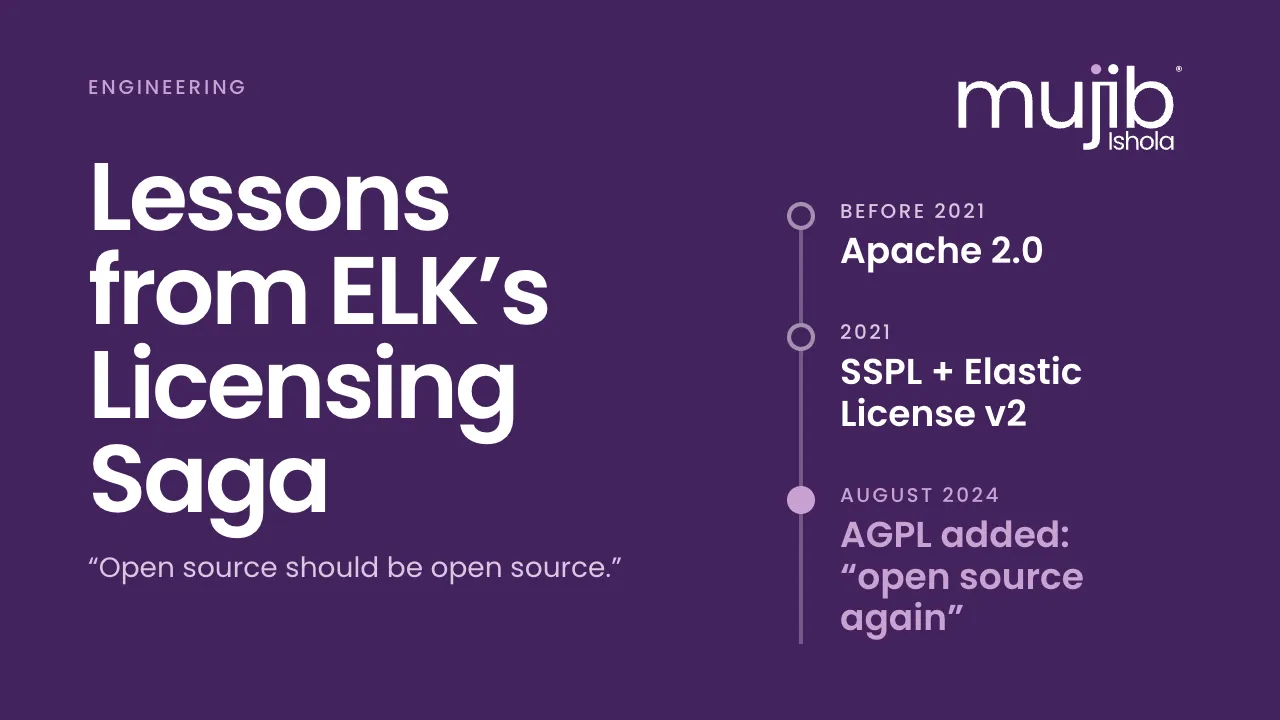
In 2021, Elastic, the company behind Elasticsearch, announced a shift from the Apache 2.0 licence to a dual licensing model: the Server Side Public License (SSPL) and Elastic License v2 (ELv2). This change aimed to protect Elastic from cloud providers like Amazon Web Services (AWS), who were offering Elasticsearch as a managed service without contributing back to the community.
While this decision was understandable from a business standpoint, it caused a rift in the open-source community. The SSPL was not recognised as an open-source licence by the Open Source Initiative (OSI), which meant Elasticsearch was no longer considered genuinely open source. This created uncertainty for those of us who had invested heavily in ELK, as we now faced questions about compliance, future support, and the ethical implications of continuing to use the stack.
Navigating the Aftermath: Frustration and Exploration
The licensing change left many, including myself, at a crossroads. Should we stick with Elastic’s version under the new licence, or should we transition to AWS’s OpenSearch or explore other alternatives like Apache Solr? This decision was not just technical but also philosophical, weighing the principles of open source against practical business needs.
For a time, it seemed like we were spending more effort on legal considerations and potential migrations than actually using ELK to solve our core problems. The debate over licences and business practices was exhausting and seemed to undermine the open-source spirit of freedom, transparency, and collaboration.
Why I Stuck with ELK: Tools for the DIKW Hierarchy
Despite the confusion and frustration, I never gave up on ELK. My commitment to this stack came from a belief in the DIKW hierarchy—transforming raw data into information, information into knowledge, and knowledge into wisdom. Tools like ELK are essential in this process, helping us manage, analyse, and visualise data to drive informed decision-making.
Concrete examples illustrate this. For instance, using Elasticsearch to quickly search through millions of log entries saved our team countless hours in diagnosing and resolving critical issues. Logstash’s ability to handle complex data pipelines and Kibana’s intuitive dashboards made it easier to communicate insights to stakeholders, enhancing our decision-making process. Abandoning ELK would have meant losing an invaluable tool in our arsenal—a tool that had already proven its worth many times over.
Elastic’s Reversal: A Welcome Change
Just when it seemed like the situation couldn’t get more complicated, Elastic made a surprising announcement in August 2024: Elasticsearch and Kibana were “open source again.” They introduced the GNU Affero General Public License (AGPL), alongside the Elastic License v2 (ELv2) and Server Side Public License (SSPL).
The AGPL, an OSI-approved open-source licence, allows Elastic to use the term “Open Source” while maintaining other licensing options. This decision aims to align with open-source values while protecting Elastic’s interests and responding to community concerns.
What This Means: Open Source Must Stay Open
This experience taught me an important lesson: open source should be open source. It shouldn’t be subject to sudden changes driven by corporate strategies that leave users in the lurch. Open-source software thrives on trust, transparency, and a commitment to freedom. When these principles are compromised, it undermines the very foundation on which open source is built.
Elastic’s decision to adopt the AGPL and commit to the Apache 2.0 licence is a positive step, but it’s also a reminder to be vigilant. As users and contributors, we must be aware of the licences governing our tools and advocate for the values that make open source so powerful.
Looking Forward: Tools for the Future of DIKW
With Elastic’s renewed commitment to open source, I feel more confident than ever in using and advocating for ELK. Returning to the Apache 2.0 licence means we can continue building on a solid, open foundation without worrying about unexpected restrictions or licensing shifts.
The experience has only strengthened my belief in the importance of tools like ELK in the DIKW era. As more organisations recognise the value of data-driven decision-making, having reliable, open-source tools in our toolbox is more critical than ever.
Conclusion: Stay True to Open Source
I stayed with ELK because I believe open source is about more than just code—it’s about community, trust, and the power of collective innovation. Elastic’s decision to return to open source shows that our voices matter and that a balance between business needs and open-source values is possible.
If you’re facing similar challenges, my advice is simple: Stay true to the tools that empower you to make the best decisions. Be vigilant, be informed, and always advocate for openness and transparency. Because open source should remain open, and with that principle, we can build better tools for the future.
Final Thoughts: What’s Your Take?
Have you been affected by the ELK licensing changes? Are you sticking with Elasticsearch, moving to OpenSearch, or exploring other alternatives? Share your experiences and insights in the comments below. Open source is shaped by its community, and together, we can ensure its future stays bright.